Pu-erh Tea and Weight Loss: What the Research Says
Current evidence does not establish that ordinary brewed pu-erh tea reliably causes weight loss. Small studies of tea extracts are not proof that a daily cup burns fat. Unsweetened tea can reduce calorie intake when it replaces a sugary drink.
See the research and its limits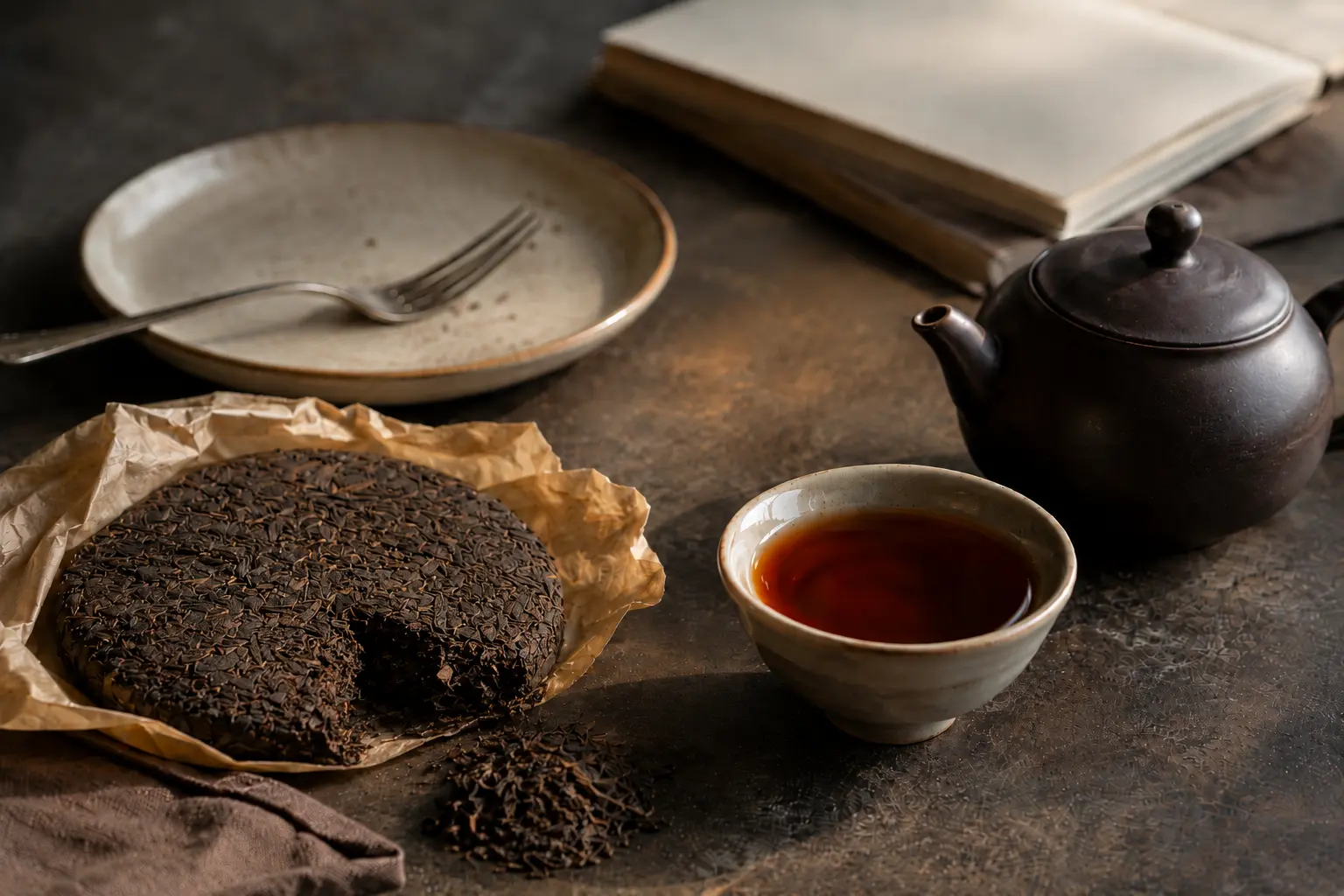
On this page
Pu-erh tea is often marketed as a way to burn fat or “cut the grease” after a meal. Current evidence does not establish that an ordinary cup reliably causes weight loss. Some research on pu-erh extracts is worth examining, but the preparation, study population, and outcome all matter. Here is what the cited studies can tell us, and what they cannot.
What the research actually says
The two papers below answer different questions. One tests a pu-erh extract in people; the other examines tea chemistry during laboratory fermentation. Neither establishes a weight-loss prescription for ordinary brewed tea.
| Study | What was tested | What it means for a tea drinker |
|---|---|---|
| 2016 randomized, placebo-controlled trial | 59 overweight or mildly obese adults with elevated cholesterol were enrolled; 3 g/day of pu-erh extract or placebo for 20 weeks | A weight benefit was reported, but total body-fat reduction was not statistically significant between groups. This was a small extract trial, not a trial of ordinary tea brewing |
| 2007 fermentation study | Tea leaves fermented with selected microorganisms; measurements of statin, GABA, and polyphenol content | Shows that fermentation can change chemical composition. It did not test weight loss in people or establish a therapeutic dose of tea |
A closer look at the human trial. Of the 59 participants enrolled, 49 completed the study; one completer was excluded from analysis for not maintaining a consistent diet and lifestyle. The extract group lost about 1 kg on average over 20 weeks. That number is the change within the extract group, not an extra 1 kg lost compared with placebo.
The paper reported a statistically significant weight/BMI benefit, but total body-fat reduction did not reach statistical significance between the extract and placebo groups. A change within one group alone is not the same as evidence that the treatment outperformed placebo. Similarly, the study did not find significant between-group differences in total cholesterol, HDL, or LDL. Blood-lipid measurements are also different outcomes from weight or body fat.
The trial was sponsored by Tasly Pharmaceuticals USA, and some authors were employees of the sponsor. Funding does not by itself invalidate a result, but it belongs alongside the small sample, participant dropouts, and limited study population when judging how much confidence to place in it.
Finally, 3 g of extract is not 3 g of tea leaves. Participants dissolved a prepared extract in water. The results cannot be translated into a recommended number of gaiwan infusions or mugs of tea. Animal experiments and laboratory mechanisms likewise cannot establish that everyday tea drinking causes weight loss in people.
Where the reputation comes from
Pu-erh is associated with meals and the idea of “cutting grease.” That drinking tradition is not evidence that the tea removes dietary fat or reduces body fat. Feeling refreshed after a meal and losing weight are different claims.
There is also a historical distinction worth keeping straight: modern ripe pu-erh, made by accelerated wet-pile fermentation, was developed in the 1970s. It should not be described as the same finished product people had been drinking for centuries. The broader history of pu-erh and aged tea is older than that modern process.
The proposed mechanisms
Caffeine, polyphenols, fermentation products, and changes to gut bacteria are possible explanations researchers investigate. A plausible mechanism is a starting point for research, not proof of a useful effect at normal drinking levels.
- Caffeine: pu-erh contains this stimulant, as do other true teas. Its presence does not establish a reliable weight-loss benefit, and increasing intake can interfere with sleep or cause jitters.
- Polyphenols and gut bacteria: experiments may help explain biological pathways, but results from isolated compounds, extracts, or animals do not tell us what a cup will do to a person’s weight.
- Fermentation compounds: the 2007 study measured changes in tea chemistry, including statin content. Detecting a compound does not make tea equivalent to a cholesterol medicine or establish a safe, effective treatment dose.
None of these mechanisms is a reason to replace prescribed treatment with tea.
What pu-erh can — and can’t — do
A practical use: plain, unsweetened pu-erh is a very low-calorie alternative to a sugary drink. Replacing that drink can lower calorie intake if the calories are not made up elsewhere. The same principle applies to water and other unsweetened drinks; it is not a unique fat-burning property of pu-erh.
What is not established: that drinking pu-erh targets belly fat, reliably suppresses appetite, compensates for a high-calorie meal, or produces lasting weight loss on its own. There is also not enough comparative evidence to choose raw over ripe pu-erh, or vice versa, for weight management.
Enjoy it for flavor, not as a “detox,” a way to cancel out food, or a substitute for individualized weight-management care.
A serious warning about “slimming teas”
Some products sold as “slimming” or “detox” teas add stimulant laxatives such as senna. These are not the same as plain pu-erh. Laxatives treat constipation; changes in bowel contents or fluid balance are not loss of body fat.
The NHS guidance on senna warns that prolonged use can cause diarrhea and electrolyte imbalance, and that use over many weeks or months can impair the bowel’s ability to work on its own. Do not use a laxative tea as a weight-loss routine.
Read the full ingredient list and avoid promises of rapid fat loss. If a product contains unfamiliar herbs or you take medication, ask a clinician or pharmacist before using it. Plain pu-erh also contains caffeine, so “just tea” is not a reason to ignore your own tolerance or medical circumstances.
How to drink it sensibly
- Choose for taste. There is no established best time to drink pu-erh for weight loss. Having it with or after a meal is a preference, not a fat-loss protocol.
- Keep the substitution in mind. If your goal is to replace a sugary drink, enjoy the tea unsweetened. Adding sugar or honey changes the calorie content.
- Mind the caffeine. There is no evidence-based slimming dose in cups. Avoid drinking more to imitate an extract study, and reduce or avoid it if it causes jitters or interferes with sleep.
- Brew for flavor. Use the water temperature guide to adjust your cup, not to pursue a supposed medicinal strength.
If you are pregnant, nursing, taking medication, or have a health condition, ask your clinician about caffeine and any added herbs. Tea extracts and supplements should not be assumed to have the same safety profile as brewed tea.
The bottom line
Evidence from small extract studies does not establish that ordinary brewed pu-erh reliably causes weight loss. There is no proven slimming dose, best drinking time, or better raw-versus-ripe choice. Replacing a sugary drink with unsweetened tea may lower calorie intake, but that is a beverage substitution, not proof that pu-erh burns fat.
For choosing and brewing the tea itself, read the full pu-erh guide or compare raw and ripe pu-erh. For help with weight management, seek advice tailored to your health rather than relying on tea claims.
Sources & further reading
- Reduction of body fat and improved lipid profile associated with daily consumption of a Puer tea extract in a hyperlipidemic population: a randomized placebo-controlled trial — 2016 human extract trial; methods, between-group results, and funding disclosures
- Effect of microbial fermentation on content of statin, GABA, and polyphenols in Pu-Erh tea — 2007 laboratory fermentation study, not a human weight-loss trial
- Common questions about senna — uses and risks of prolonged laxative use (NHS)
- Pu’er tea — background on raw tea, aging, and modern wet-pile fermentation (Wikipedia)
This article is general information, not medical advice. The cited research does not establish brewed pu-erh as a weight-loss treatment. We update the guide when the evidence or our interpretation changes.
Frequently asked questions
- Does pu-erh tea actually help you lose weight?
- Current evidence does not establish that ordinary brewed pu-erh reliably causes weight loss. A small trial of a pu-erh extract reported a weight benefit, but that is not the same as testing everyday tea drinking. Replacing a sugary drink with unsweetened tea can reduce calorie intake; that is different from a special fat-burning effect.
- Is raw or ripe pu-erh better for weight loss?
- There is not enough reliable comparative evidence to recommend either raw or ripe pu-erh for weight loss. Fermentation changes tea chemistry, but that does not prove one type causes greater weight loss in people. Choose for flavor and caffeine tolerance, not a slimming claim.
- How much pu-erh should I drink to lose weight?
- There is no established number of cups or best drinking time for weight loss. Extract doses from studies cannot be converted directly into cups of brewed tea. Pu-erh contains caffeine, so drink according to your tolerance and do not increase your intake to chase a weight-loss effect.
- Are pu-erh 'slimming' or 'detox' teas safe?
- Check the ingredients rather than trusting the label. Some products add stimulant laxatives such as senna, which treat constipation, not body fat. Misuse can cause diarrhea and electrolyte problems. Plain pu-erh still contains caffeine. Avoid products promising rapid weight loss, and ask a clinician or pharmacist about ingredients if you take medication or have a health condition.
Keep reading
- Pu-erh Tea: The Complete Beginner's Guide
What is pu-erh tea? A plain-English guide to raw vs ripe pu-erh — how it's made and aged, what it tastes like, and how to brew your first cup.
- Raw vs Ripe Pu-erh: What's the Difference?
Raw (sheng) vs ripe (shou) pu-erh, explained: how to tell them apart by color, aroma and taste, how each ages, and which one to drink first.
- Water Temperature Guide for Every Chinese Tea Type
The right water temperature for green, white, oolong, black and pu-erh tea — a complete chart, why it matters, and how to hit it without a thermometer.