Chinese Tea for Anxiety and Stress Relief
If caffeine makes you anxious, plain rose, chrysanthemum, or mint infusions avoid that stimulant; green and most jasmine teas do not. Herbal teas have their own safety cautions, and no tea is a treatment for an anxiety disorder.
Compare teas and caffeine cautions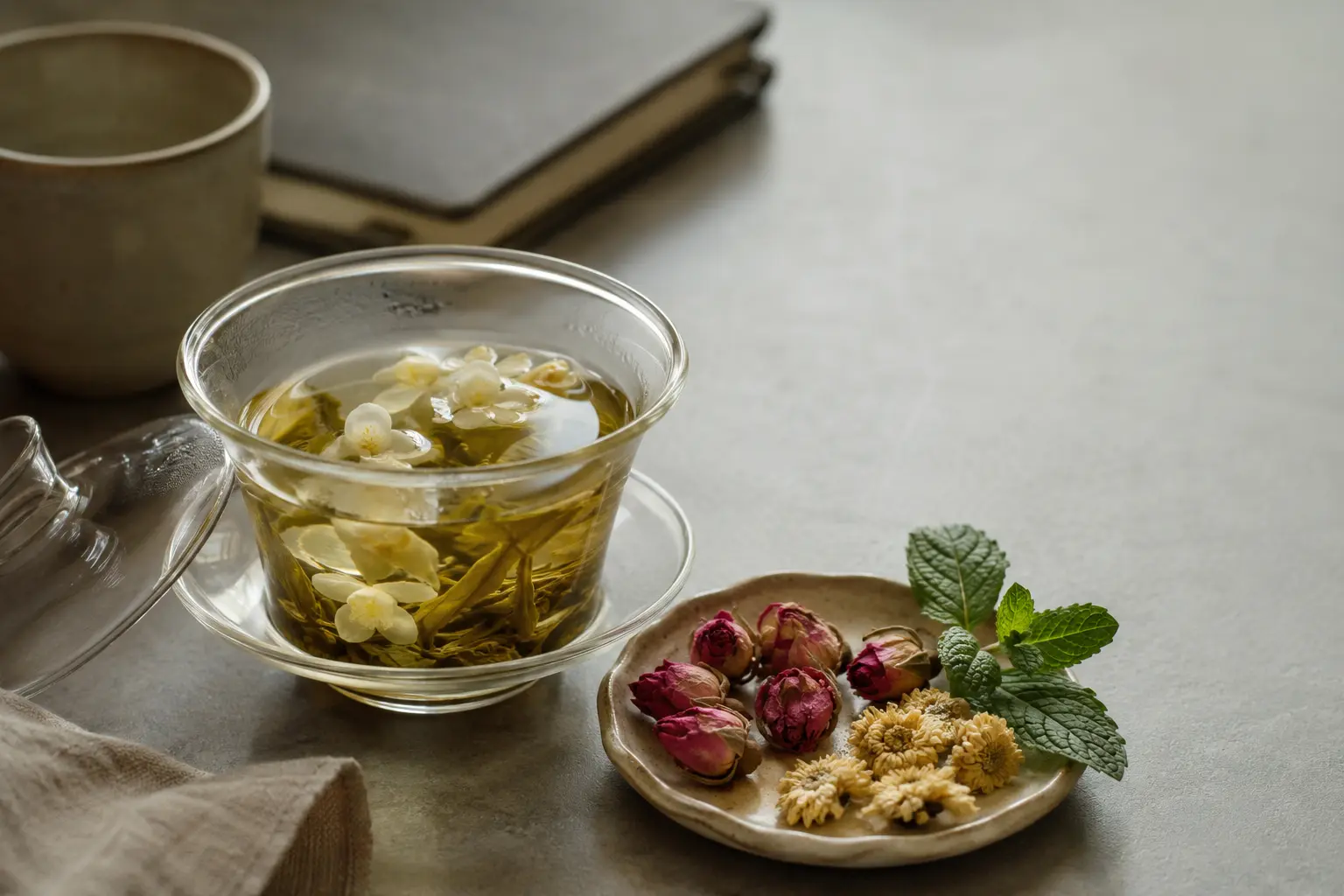
On this page
A warm cup is one of the oldest ways people calm a racing mind, and Chinese tea culture is built around exactly that ritual. But it helps to be clear-eyed about what tea can and can’t do for anxiety and stress: it’s a gentle, supportive habit, not a cure, and one popular choice — caffeinated tea — can even cut both ways. This guide covers the evidence and its limits, from L-theanine research to the experience of brewing and caffeine-free alternatives.
This is about daytime stress and a busy mind. If your goal is winding down for the night, see our companion guide to Chinese tea for sleep, which focuses on caffeine-free bedtime options.
Choosing a cup: caffeine and cautions
| Tea or infusion | Caffeine? | Main consideration |
|---|---|---|
| Plain rosebuds | No | A floral option, not a proven anxiety treatment; check herbal safety cautions |
| Plain chrysanthemum | No | Avoid with daisy-family allergies; medication interactions are possible |
| Plain mint | No | A caffeine-free option for taste, not an established anxiety treatment |
| Green tea | Yes | Contains L-theanine, but caffeine can worsen anxiety in sensitive people |
| Jasmine-scented green or white tea | Yes | The tea base supplies caffeine, even though the flowers do not |
These distinctions assume plain ingredients. Adding tea leaves to a flower or mint infusion adds caffeine. If you’re pregnant, nursing, taking medication, or have plant allergies, ask a clinician about the herbs you plan to use.
The calm in your cup: L-theanine
Tea’s most interesting calming ingredient is L-theanine, an amino acid found almost nowhere in nature except the tea plant. It’s associated with a state of calm, focused alertness — relaxed but not drowsy — and it’s the leading explanation for why a cup of tea can feel soothing rather than merely stimulating.
The research is promising but should be read carefully. A systematic review of trials concluded that L-theanine, at 200–400 mg a day, may help reduce stress and anxiety in people under pressure, and a randomized controlled trial found that 200 mg daily lowered stress-related symptoms in healthy adults. Separately, a large population study found that people who drank more green tea reported lower psychological distress — though that’s an association, not proof that the tea caused it.
Here’s the honest catch: those trials used purified L-theanine supplements, and a single cup of tea contains far less — very roughly 6 to 25 mg, varying with the leaves and preparation. Supplement results do not establish that a cup of tea reduces anxiety. Green tea is one source of L-theanine, but it also supplies caffeine, so choose according to your own tolerance rather than trying to reach a supplement dose by drinking more tea.
A pause for brewing
Making tea can be a pleasant break. Heating the water, measuring the leaf, pouring, and sipping slowly give you something simple to focus on. Some people find that routine relaxing; that personal experience is different from evidence that tea treats anxiety.
The gongfu method offers repeated short infusions and time to notice the aroma and taste. Choose a caffeinated tea only if it suits you, or enjoy a plain herbal infusion without following a gongfu routine. Neither the brewing method nor the drink replaces mental-health care.
Caffeine-free flowers for a tense mind
When you want a soothing cup with no caffeine to second-guess, the Chinese tradition reaches for flowers and herbs. These rest mostly on long use and pleasant experience rather than hard clinical proof. Caffeine-free does not mean risk-free: allergies, medication interactions, and individual health circumstances still matter.
Rose (mei gui hua)
Dried rosebuds, mei gui hua (玫瑰花), make a fragrant, faintly sweet infusion that Chinese tradition prizes for soothing the mood — in the old framing, “coursing the liver” to ease irritability, frustration, and the tense, stuck feeling of a stressful stretch. It’s caffeine-free, beautiful in the cup, and often blended with a little black or green tea or some goji. These uses are traditional, not evidence that rose treats stress or low mood. Blends containing tea leaves also contain caffeine.
Jasmine (mo li hua)
Jasmine is deeply soothing — but read the label. Jasmine tea is almost always green or white tea scented with jasmine blossoms, which means it carries the caffeine of the base tea. The calming part is largely the aroma: the soft, sweet scent of jasmine is one of the most relaxing in all of tea. Enjoy it for that, but if caffeine winds you up, treat jasmine tea as a daytime pleasure rather than a calm-down cup — or seek out an infusion of jasmine flowers alone.
Chrysanthemum (ju hua)
Chrysanthemum (菊花) is the everyday caffeine-free flower, valued in Chinese tradition as cooling and calming — the light, floral cup for settling after a long day. It’s pleasant and widely available, and for daytime stress it’s a fine, mild companion to rose. We cover its types, benefits, and cautions in full in our chrysanthemum tea guide. One caution: chrysanthemum is in the daisy family, so skip it if you’re allergic to ragweed or related plants.
Mint (bo he)
Mint (薄荷, bo he) is the bright, cooling option. Chinese tradition uses it to ease a stuck, tense feeling — the same “course the liver” idea as rose — and its clean, refreshing aroma genuinely helps clear a foggy, over-stretched head. It brews into a crisp, caffeine-free cup on its own, and it folds easily into a green tea or a rose-and-chrysanthemum blend when you want a lift rather than a wind-down. For a mid-afternoon stress slump, it’s the freshest choice on this list.
Caffeine and anxiety: the double edge
This is the part most “best tea for anxiety” articles skip. Caffeine is a stimulant, and for people prone to anxiety it can trigger or worsen exactly the symptoms they’re trying to calm — a racing heart, jitteriness, a wound-up mind. L-theanine should not be relied on to prevent caffeine-related anxiety.
So the practical advice splits by who you are:
- If caffeine doesn’t bother you, a good green or light oolong, brewed attentively, can be a calming ritual that leaves you alert and settled.
- If you’re sensitive or anxiety-prone, lean toward caffeine-free infusions and check herbal safety cautions. If you still choose caffeinated tea, a shorter, cooler steep may extract less caffeine under otherwise similar conditions, but it does not make tea caffeine-free or give you a reliable caffeine dose. Our water temperature guide covers flavor adjustments.
Pay attention to your own response. The same cup that relaxes one person makes another jittery.
How to brew a calming cup
Choose a preparation you enjoy without using brewing as a way to dose a treatment.
- For chrysanthemum, start with 4–6 dried flowers per cup, water around 90°C, and 3–5 minutes, as in our chrysanthemum guide. For rosebuds, follow the supplier’s brewing directions and adjust to taste.
- For green or jasmine tea, keep the water cooler (around 75–80°C) and the steep short for flavor. The drink will still contain caffeine.
- Brew it gongfu style if you have ten minutes — the unhurried rhythm is part of the point.
- Breathe in the aroma before you sip. With jasmine and rose especially, the scent is half the experience.
A note on evidence and safety
Be honest with yourself about what this is. Tea — caffeinated or herbal — is a supportive ritual that may take a gentle edge off everyday stress. The evidence for L-theanine is promising but based on supplement doses larger than a cup delivers, and the herbal traditions rest largely on long use rather than clinical proof. None of it is a treatment for an anxiety disorder.
Persistent, severe, or worsening anxiety deserves real care. And some of these plants carry cautions — chrysanthemum for daisy allergies, and many herbs in pregnancy, while nursing, or alongside medications. This article is general information, not medical advice. Talk to a doctor or mental-health professional about ongoing anxiety, and before adding herbs to your routine if you’re pregnant, nursing, or taking medication — and never use tea in place of treatment.
The short version
Choose a cup by caffeine tolerance, taste, and safety, not a promise of anxiety relief. Plain rose, chrysanthemum, and mint contain no caffeine; green and most jasmine teas do. L-theanine supplement research cannot tell us that an ordinary cup treats anxiety, though brewing may be a pleasant pause. Check herbal cautions, and seek professional care for persistent or worsening anxiety.
Explore more in our health section, wind down at night with Chinese tea for sleep, or learn the calming gongfu ritual itself.
Sources & further reading
- The Effects of L-Theanine on Stress and Anxiety: a Systematic Review — trials suggest 200–400 mg/day may help under stress (PubMed)
- L-Theanine and Stress-Related Symptoms: a Randomized Controlled Trial — 200 mg/day lowered stress symptoms in healthy adults (PMC)
- Green tea consumption and lower psychological distress (Ohsaki Cohort) — a population-level association, not proof of cause (PubMed)
- Theanine — the calming amino acid in tea (Wikipedia)
- Jasmine tea — scented tea and its base (Wikipedia)
Researched and reviewed by the Cha Wisdom editorial team. This is general information, not medical advice; health notes reflect preliminary or traditional evidence. We update our guides when the facts or our recommendations change.
Frequently asked questions
- Does green tea help with anxiety?
- Green tea contains L-theanine, but research on L-theanine supplements does not establish that drinking green tea treats anxiety. Green tea also contains caffeine, which can worsen jitters and anxiety in sensitive people. If caffeine bothers you, a plain caffeine-free infusion avoids that stimulant; check the herb's safety cautions too.
- What is L-theanine, and does it reduce stress?
- L-theanine is an amino acid found in tea. Reviews of trials suggest 200–400 mg a day may reduce stress and anxiety under pressure, but these studies used supplements. A cup of tea contains far less — very roughly 6–25 mg — so those findings do not establish that drinking tea treats anxiety.
- Which Chinese herbal tea is best for stress?
- Plain rose and chrysanthemum are traditional caffeine-free choices, but neither is established as a treatment for stress or anxiety. Most jasmine tea contains caffeinated tea leaves. Choose for taste and caffeine tolerance, and check allergy, medication, pregnancy, and breastfeeding cautions before making herbs a regular habit.
- Is jasmine tea caffeinated?
- Usually yes. Most jasmine tea is green (sometimes white) tea scented with jasmine blossoms, so it carries the caffeine of the base tea. The jasmine itself adds aroma, not caffeine. If you want the jasmine character without caffeine, look for an infusion of jasmine flowers alone, though it's far less common.
- Can tea treat anxiety?
- No. Tea can be a calming ritual and may take a gentle edge off everyday stress, but it is not a treatment for an anxiety disorder. Persistent or severe anxiety deserves care from a doctor or mental-health professional. This article is general information, not medical advice — don't use tea in place of treatment.
Keep reading
- Chrysanthemum Tea: Caffeine, Benefits & Side Effects
Is chrysanthemum tea caffeine-free? Learn when blends contain caffeine, plus the benefits, brewing tips, side effects, and allergy cautions to know.
- Chinese Tea for Sleep: 6 Best Options Ranked
The best Chinese teas for sleep are caffeine-free. We rank 6 traditional options — from sour jujube seed to chrysanthemum — and explain what actually helps.
- Water Temperature Guide for Every Chinese Tea Type
The right water temperature for green, white, oolong, black and pu-erh tea — a complete chart, why it matters, and how to hit it without a thermometer.